
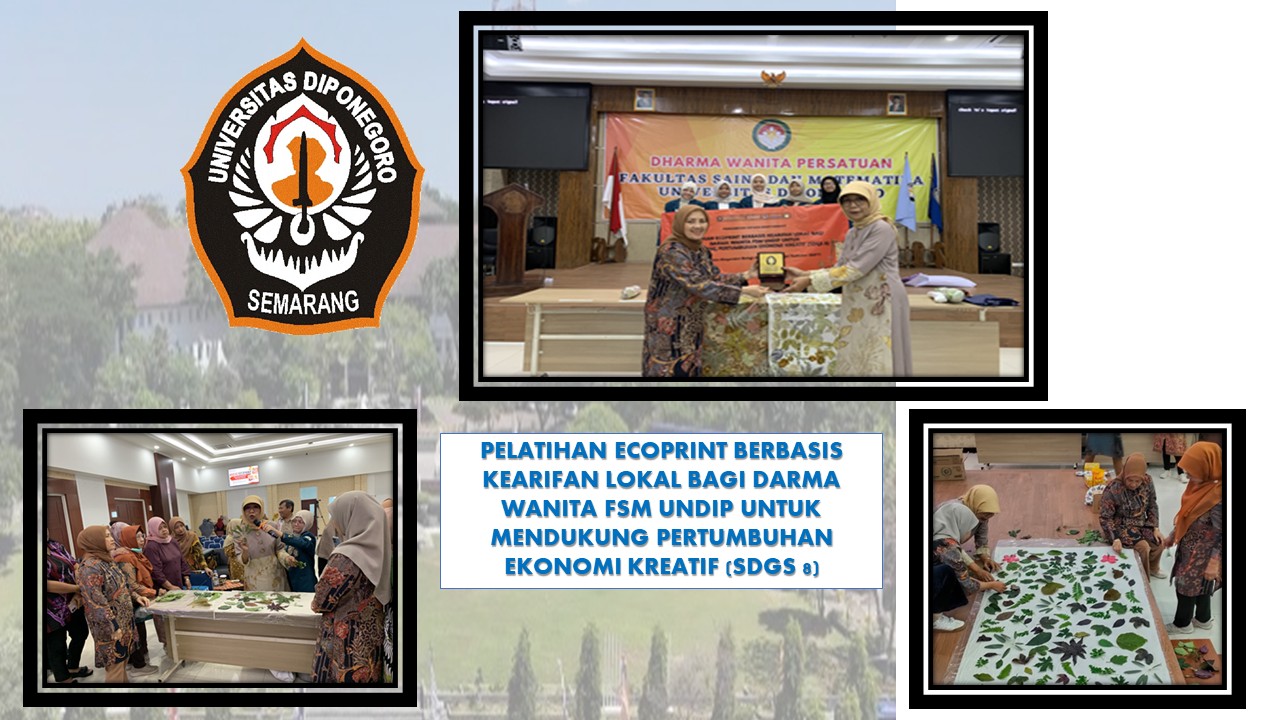
bio.undip.ac.id. Organic waste and fallen leaves often overlooked in our surroundings can actually be transformed into high-value fashion products. Recognizing this potential, the Community Service Team from the Plant Structure and Function (BSFT) laboratory, Department of Biology, Faculty of Science and Mathematics (FSM) at Diponegoro University (UNDIP), organized a specialized workshop titled “Local Wisdom-Based Ecoprint Training for Dharma Wanita FSM UNDIP to Support Creative Economic Growth (SDG 8)” on Friday (13/03).
Held at the FSM UNDIP campus, the event was designed to equip members of Dharma Wanita (the association of civil servants’ wives) with the technical skills to process natural textile dyes. This initiative serves as a concrete manifestation of the institution’s commitment to the Sustainable Development Goals (SDGs), specifically Goal 8: Decent Work and Economic Growth.
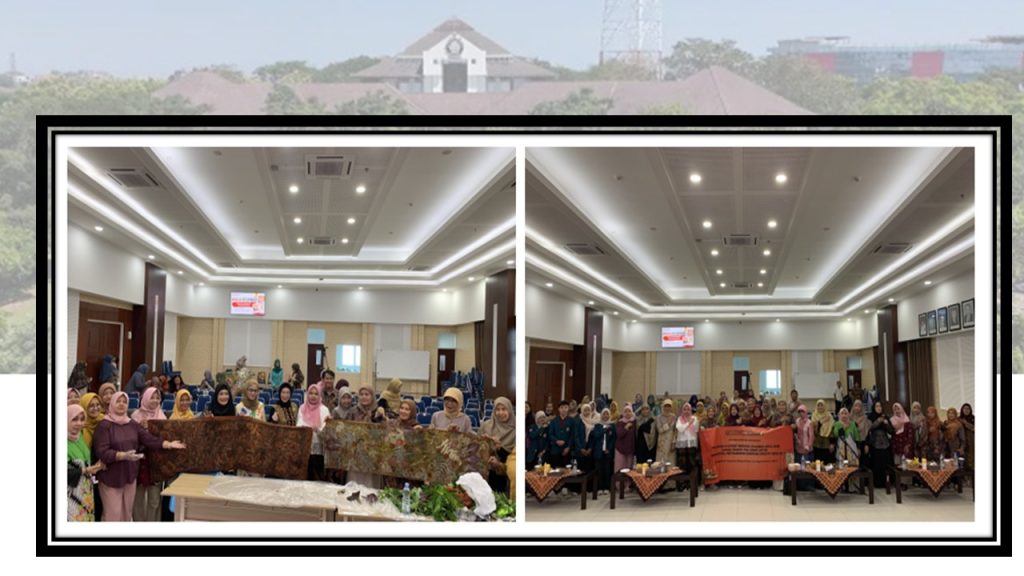
The program commenced with an insightful socialization session. The service team highlighted how local wisdom—such as utilizing teak leaves, castor leaves (jarak), and lanang leaves—can serve as potent natural dyes. Amidst the rising trend of sustainable fashion, products made from natural pigments have proven to be eco-friendly and command high market value due to their unique, artisanal appeal.
Following the introduction, the session moved into a live demonstration. The team showcased the ecoprint technique, demonstrating how leaves are meticulously arranged on prepared fabric. Participants then had the opportunity to practice the “blanket technique” firsthand. With high enthusiasm, they composed various leaf patterns and applied pressure to transfer the plants’ natural pigments directly onto the fabric fibers.
The hands-on session resulted in various aesthetic and exclusive pieces featuring organic motifs and natural color gradients. The uniqueness of the process ensures that no two prints are ever identical. “The results are surprisingly beautiful and definitely market-ready,” remarked one participant.
Through this relaxed yet educational approach, the FSM UNDIP Service Team hopes that ecoprinting will become more than just a hobby. This initiative is expected to spark an entrepreneurial spirit and empower women to create their own creative economy products, ultimately contributing to the economic independence of their families.