
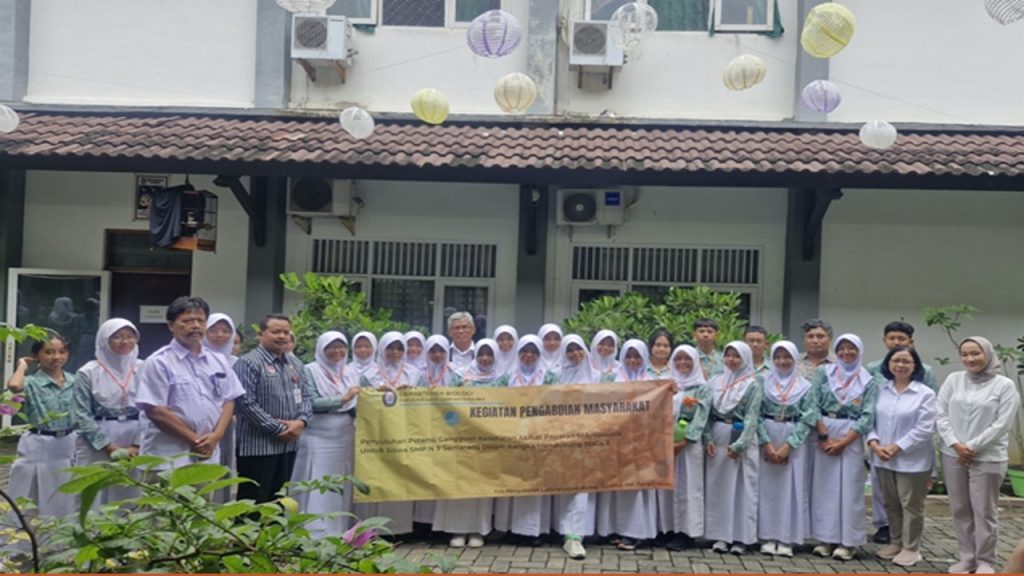
The Department of Biology, Faculty of Science and Mathematics (FSM), Diponegoro University (UNDIP) has once again demonstrated its commitment to the Tri Dharma Perguruan Tinggi (Three Pillars of Higher Education) through a Regular Community Service (PkM) activity. The event, themed “Educational Awareness on Potential Health Disorders Due to Microplastic Exposure for SMP Negeri 9 Semarang Students in Support of SDGs 3,” took place during the Even Semester of 2026.
The activity was chaired by Rizki Sandhi Titisari, S.Si., M.Si., along with three member lecturers: Dr. Sunarno, S.Si., M.Si., Dr. Sri Isdadiyanto, S.Si., M.Si., and Dr. Agung Janika Sitasiwi, M.Si. — all of whom are teaching staff at the Animal Structure and Function Biology (BSFH) Laboratory, Department of Biology, FSM UNDIP. Five undergraduate Biology students from FSM UNDIP also participated as organizing assistants. This event was funded by the DIPA PNBP of the Faculty of Science and Mathematics, UNDIP.
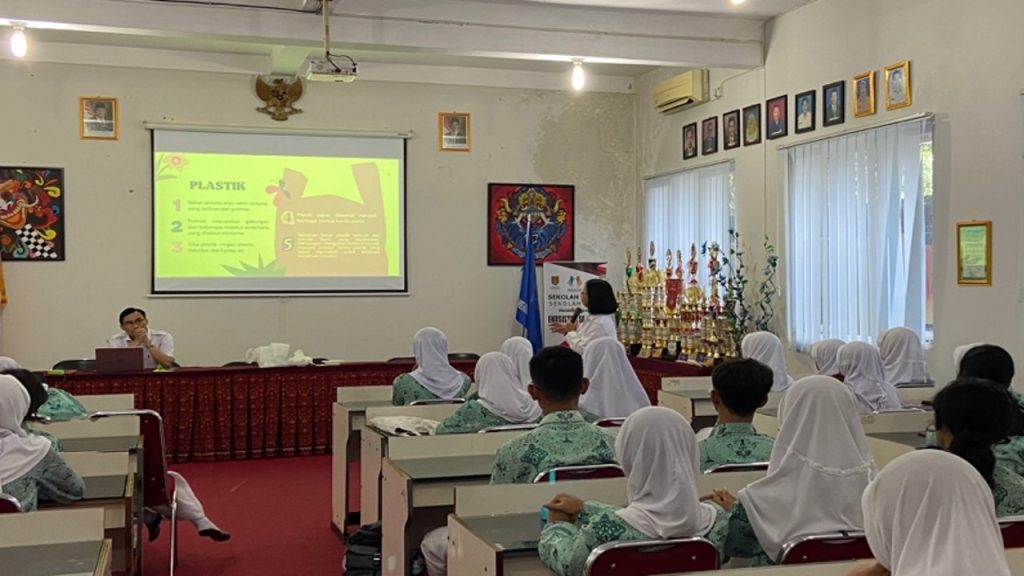
Driven by the low level of health literacy regarding microplastics among middle school students, the PkM team from the Department of Biology, FSM UNDIP designed an educational intervention that is contextual, evidence-based, and oriented toward real behavioral change. The series of awareness activities was designed to be interactive and based on scientific evidence. Students were guided to understand how plastic discarded into the environment gradually fragments into microscopic particles due to UV exposure, mechanical abrasion, chemical reactions, and microbial activity — a process that is irreversible.
The material was then expanded to exposure pathways that have long gone unnoticed: ingestion through bottled drinking water, seafood, table salt, and even plastic-based tea bags that release billions of nanoplastic particles every time they are brewed with hot water; inhalation through synthetic textile fibers and road dust from vehicle tire abrasion; as well as dermal contact through beauty products containing microbeads.
One of the sessions that garnered the most enthusiasm from students was the introduction to plastic resin codes (1–7) — the triangular symbols printed on the bottom of almost every plastic product. Using educational media such as posters and worksheets, students were trained to identify types of plastic, understanding which ones are relatively safe and which ones should be avoided, especially when coming into contact with hot food or beverages.
“I just found out that styrofoam is code 6 and is dangerous when exposed to heat. Now I want to tell my parents at home not to buy food packaged in styrofoam anymore,” expressed one of the participating students.
As a concrete output of the activity, the team compiled a booklet titled Mengenal Mikroplastik & Dampaknya bagi Kesehatan (Understanding Microplastics & Their Impact on Health) — a concise A5-format guide specially designed for middle school students. This booklet contains simplified scientific explanations, complete with five illustrative diagrams based on data from reputable international journals, a plastic resin code table, as well as practical and applicable prevention tips.
“We want the students to have a handbook after this activity is over. Not just hearing it and then forgetting it, but actually having a reference they can re-read and share with their families,” explained Rizki Sandhi Titisari.
This activity is part of UNDIP’s commitment to supporting the achievement of the Sustainable Development Goals (SDGs), particularly SDG 3: Good Health and Well-being. Through a science literacy-based promotive-preventive approach, the team hopes that the knowledge instilled today will grow into habits and real action within families and the wider community.
The Principal of SMP Negeri 9 Semarang welcomed this activity positively. “We highly appreciate this collaboration with UNDIP. The issue of microplastics is highly relevant to the students’ daily lives, and the approach used by the team was very easy for the children to understand,” they said.
Moving forward, the PkM team plans to expand the reach of similar programs to other schools in Semarang City, in line with the increasing urgency of environmental health literacy in society.